
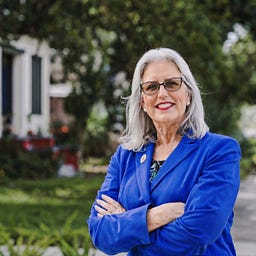
Kimberly Overman for Congress
August 11, 2026 · Newsletter
Healthcare Should Not Depend on Your ZIP Code, Job, Gender, or Income

Patients, caregivers, seniors, families, healthcare workers, women, veterans, people with disabilities, parents, small business owners, and communities facing healthcare disparities often ask candidates where they stand on affordable healthcare, prescription drugs, Medicare, Medicaid, ACA protections, reproductive healthcare, maternal healthcare, healthcare reform, public health preparedness, and safe staffing. Voters deserve the same transparency. Here is where I stand.
Why This Matters
Healthcare is a fundamental necessity. Families in Florida’s 12th Congressional District are facing rising healthcare costs, prescription drug prices, insurance pressures, caregiver burdens, provider shortages, and gaps in access.
Thanks for reading! Subscribe for free to receive new posts and support my work.
When families delay care, skip prescriptions, lose coverage, or cannot find a provider, the impact is not limited to one doctor visit. It affects household budgets, work stability, retirement security, caregiving responsibilities, maternal health, mental health, and long-term financial security.
Healthcare policy must be grounded in the reality that people need care before a crisis becomes unmanageable. A system that waits until someone is in the emergency room is more expensive, less humane, and less effective.
Why This Matters to Me
As a retired Certified Financial Planner, small business owner, grandmother, caregiver, and parent raising my grandson, I understand how quickly healthcare costs can affect family finances.
Throughout my professional career, I helped families plan for medical expenses, long-term care, disability, retirement healthcare costs, and unexpected health emergencies.
As a caregiver, I personally experienced how complicated healthcare and social-service systems can become when families are already navigating stressful circumstances. I know what it feels like to spend time fighting bureaucracy instead of focusing on a loved one.
Healthcare decisions are never abstract. They affect family budgets, caregiving responsibilities, work schedules, retirement security, and quality of life.
My Record
As a Hillsborough County Commissioner, I worked on public health, behavioral health, healthcare access, affordable housing, transportation, economic opportunity, and the support systems that affect community health outcomes.
During the COVID crisis, I served as Vice Chair of the Hillsborough County Emergency Policy Group. In that role, I worked with public-health professionals, pandemic experts, hospital leaders, long-term care and skilled nursing facility representatives, state health officials, and county partners during a crisis that exposed the consequences of inadequate emergency planning.
I partnered with USF Health and pandemic experts to help guide Hillsborough County through difficult public-health decisions. We collaborated with local hospitals, skilled nursing units, long-term care facilities, morgues, and the State Health Department to adopt policies and create support systems intended to minimize loss of life while protecting as much of the local economy as possible.
I have also been a long-time supporter of the Hillsborough County Health Care Plan, a local safety-net model designed to help residents who have limited income and assets and do not qualify for other coverage. That plan reflects an important principle: communities can build practical solutions that close healthcare access gaps.
That experience offers valuable leadership benefits for residents of FL-12 because healthcare policy requires calm decision-making, trusted experts, public accountability, and a willingness to coordinate across systems before crisis becomes catastrophe.
My Position
I support strengthening the Affordable Care Act, protecting Medicare and Medicaid, reducing prescription drug costs, allowing Medicare and Medicaid to negotiate drug prices, expanding access to care, protecting reproductive freedom, preserving Traditional Medicare from privatization, adding dental, vision, and hearing benefits, improving healthcare workforce capacity, and supporting safe staffing standards in healthcare settings.
Healthcare should be affordable, accessible, and centered on patients rather than insurance company profits or political interference.
I believe healthcare reform should be evaluated by outcomes, access, affordability, quality, fiscal responsibility, and whether people can actually get the care they need.
Healthcare Affordability and Household Budgets
Healthcare affordability is a cost-of-living issue.
Families are already managing housing costs, insurance costs, childcare, transportation, groceries, utilities, and retirement savings. When healthcare costs rise, everything else becomes harder.
A family should not have to choose between filling a prescription and paying rent. A senior should not have to delay treatment because of cost. A small business owner should not have to choose between growing a business and providing healthcare coverage.
Healthcare affordability must be addressed as part of the broader affordability crisis facing FL-12 families.
Prescription Drug Affordability
Prescription drug costs are one of the most direct ways families experience healthcare affordability.
I support policies that reduce prescription drug prices, allow Medicare and Medicaid to negotiate drug prices, increase transparency, cap excessive out-of-pocket burdens, and hold drug companies accountable when prices rise faster than inflation.
The goal should be simple: people should be able to afford the medications their doctors prescribe.
Medicare, Medicaid, and Retirement Healthcare Security
Medicare and Medicaid are lifelines for seniors, people with disabilities, children, low-income families, pregnant women, and people needing long-term care.
I support protecting Medicare and Medicaid, strengthening access, preserving Traditional Medicare from privatization, and adding dental, vision, and hearing benefits.
For seniors and retirees, healthcare security is retirement security. People who worked for decades and planned their futures around earned benefits deserve stability, not uncertainty.
The Hillsborough County Health Care Plan and Local Safety-Net Models
The Hillsborough County Health Care Plan is an important local example of how communities can help close healthcare access gaps.
Hillsborough County describes the plan as a comprehensive managed care program for residents with limited income and assets who do not qualify for other health coverage, including Medicare and Medicaid. It covers primary and specialty care, inpatient and outpatient treatment, prescription drugs, and other medically necessary services.
I have long supported this model because it recognizes a basic truth: if people cannot access preventive and primary care, conditions worsen, emergency rooms become the default point of care, and costs rise for everyone.
Congress should learn from practical local safety-net models that connect people with care before medical problems become crises.
Reproductive Healthcare Access
Healthcare decisions belong between patients and their healthcare providers, not politicians.
Reproductive healthcare includes contraception, cancer screenings, prenatal care, pregnancy care, fertility treatment, IVF, miscarriage care, maternal healthcare, medication abortion, and abortion care. These are not abstract political debates. They affect families, healthcare providers, and patients every day.
I support protecting access to contraception, IVF and fertility treatment, maternal healthcare, abortion care, and medication abortion. I support restoring federal protections for reproductive freedom and ensuring that people can receive care without unnecessary government interference.
Reproductive healthcare should not depend on where someone lives, how much money they make, or whether they can take time off work and travel hundreds of miles for care.
Maternal Healthcare and Family Stability
Maternal healthcare is healthcare. Prenatal care, postpartum care, high-risk pregnancy care, maternal mental health, lactation support, nutrition support, doula support, and access to trusted providers all affect outcomes for mothers and babies.
Local programs in Hillsborough County show the importance of partnerships among hospitals, public-health agencies, community organizations, and USF Health to address maternal health disparities and improve access to care.
Congress should support policies that expand maternal healthcare access, strengthen postpartum support, reduce disparities, and invest in community-based care.
Mental Health and Behavioral Health
Mental health is healthcare.
Families need access to behavioral-health providers, substance-use treatment, crisis services, youth mental-health care, trauma-informed services, and affordable treatment options.
The Pasco County 2025 Community Health Needs Assessment identified Behavioral Health as the second-ranked community need and documented provider access challenges, affordability barriers, and mental-health service gaps.
Healthcare reform that ignores mental health is incomplete.
Healthcare Workforce and Safe Staffing
Access to care depends on whether enough healthcare workers are available to provide it.
Provider shortages, nurse staffing challenges, specialist access, behavioral-health limitations, home health workforce needs, and long appointment wait times all affect patient outcomes.
I support improving healthcare workforce capacity, supporting safe staffing standards, expanding training pipelines, strengthening community health workers and care coordination, and making it easier for patients to navigate care.
Pandemic Preparedness and Public Health Leadership
COVID exposed how quickly a public-health emergency can overwhelm healthcare systems when planning, communication, coordination, and supply systems are inadequate.
During the pandemic, local leaders had to coordinate with hospitals, skilled nursing units, long-term care facilities, morgues, public-health agencies, medical experts, and community partners to respond to rapidly changing conditions.
The lesson is clear: public-health preparedness must be built before a crisis. Congress should support modern public-health infrastructure, emergency planning, transparent communication, data systems, healthcare surge capacity, and coordination across federal, state, local, hospital, and community systems.
What Recent Federal Healthcare Changes Mean for FL-12
The recently enacted federal budget law commonly referred to as the One Big Beautiful Bill raised concern among healthcare providers, patient advocates, and policy analysts because of changes affecting Medicaid, Affordable Care Act marketplace coverage, and healthcare access.
For families in Pasco and Hillsborough Counties, this matters because local healthcare systems are already under pressure. If more residents lose coverage, delay care, or face higher out-of-pocket costs, the burden does not disappear. It shifts to families, caregivers, hospitals, community health centers, emergency rooms, nursing facilities, physicians, and local taxpayers.
Congress should be focused on making healthcare more affordable and accessible, not creating new bureaucratic barriers that make it harder for people to keep coverage.
Evaluating Healthcare Reform Options
I believe healthcare reform should be guided by evidence, outcomes, affordability, and patient access.
Congress should work with healthcare providers, patients, economists, actuaries, labor organizations, public-health experts, healthcare policy experts, and communities to evaluate reforms that improve access, reduce costs, and strengthen healthcare security.
That includes examining proposals such as Medicare for All and other approaches to expanding coverage while ensuring quality, fiscal responsibility, and patient choice.
The goal should be better care, lower costs, and a healthcare system that works for patients, families, providers, and taxpayers.
Caregiver Experience
My commitment is shaped by personal experience as a caregiver navigating healthcare and social-service systems.
I spent years advocating for my family through complicated systems that too often make people prove their need again and again.
That experience taught me how quickly families can be overwhelmed when healthcare systems are fragmented, underfunded, or tilted toward corporate interests rather than patient care.
No family should have to become an expert in bureaucracy just to get the care they need.
What Voters in FL-12 Are Experiencing
Residents in Pasco and Hillsborough Counties talk about insurance costs, prescription drug prices, provider shortages, specialist access, mental-health needs, reproductive healthcare barriers, caregiver burdens, Medicare concerns, Medicaid eligibility concerns, and long waits for care.
Families want a healthcare system that is affordable, accessible, understandable, and responsive. They want care before crisis. They want providers they can reach. They want medications they can afford. They want government to protect their healthcare, not make it harder to access.
Detailed FL-12 Examples
A senior on a fixed income may face rising prescription costs while also paying more for housing, groceries, insurance, and utilities.
A caregiver may coordinate appointments across multiple specialists while trying to work, raise children, manage paperwork, and advocate for a loved one.
A parent may struggle to find affordable pediatric care, behavioral-health care, or a specialist who accepts their insurance.
A woman seeking reproductive healthcare may face delays, travel burdens, costs, provider shortages, or political restrictions that interfere with timely medical care.
A veteran may coordinate care between VA providers and community providers while managing prescriptions, transportation, mental-health needs, or chronic conditions.
A rural or transportation-limited resident may delay care because getting to appointments requires time off work, reliable transportation, and money for copays or prescriptions.
A small business owner may want to provide coverage but face premium costs that strain both the business and employees.
These examples show why healthcare affordability, access, workforce capacity, reproductive freedom, and public-health preparedness must be addressed together.
Evidence-Based Healthcare Policy
Good healthcare policy should be measured by results.
Success should be measured by coverage rates, healthcare affordability, prescription affordability, provider availability, appointment wait times, maternal-health outcomes, preventive care use, mental-health outcomes, patient satisfaction, health equity indicators, emergency-room reliance, and whether people receive care before conditions become crises.
Healthcare policy should be guided by evidence, transparency, expert input, patient experience, fiscal responsibility, and measurable improvements in people’s lives.
The goal should be healthier people, stronger families, more resilient communities, and a healthcare system that works.
How I Would Lead in Congress
I will support policies that lower healthcare costs, reduce prescription drug prices, expand access to care, protect Medicare and Medicaid, strengthen the Affordable Care Act, preserve Traditional Medicare from privatization, improve healthcare workforce capacity, and support safe staffing standards.
I will fight to protect reproductive healthcare access, including contraception, IVF, maternal healthcare, medication abortion, and abortion care. I will oppose efforts that place politicians between patients and healthcare providers.
I will work to ensure that federal healthcare policies do not make coverage less accessible for working families, seniors, people with disabilities, veterans, caregivers, and rural communities.
Healthcare should not depend on income, ZIP code, job status, gender, or the ability to navigate bureaucracy. It should be available to every person who needs it.
Support Overman for Congress today!
Why This Matters in FL-12
Florida’s 12th Congressional District deserves a representative who understands our communities because she has lived, worked, and served here.
The challenges facing families in Pasco and Hillsborough Counties are not abstract policy debates. They are the rising cost of living, the affordability of healthcare, the security of Social Security and Medicare, the strength of our local economy, and the opportunities available to the next generation.
I am running for Congress because I believe effective government can help solve these challenges when leaders are willing to listen, work across differences, and focus on results.
That is the leadership I have provided throughout my public service, and it is the leadership I will bring to Washington.
Leadership Matters.
Learn more: kimberlyoverman.com
Volunteer: kimberlyoverman.com/volunteer
Contribute: secure.numero.ai/contribute/Overman-for-Congress
Paid for by Overman for Congress
Thanks for reading! Subscribe for free to receive new posts and support my work.